A New Chapter in the Story of Life
09/09/2026
FCC Communities Foundation funding has helped deliver spectacular new displays that connect visitors with the wonders of biodiversity, evolution and our changing planet.
Oxford University Museum of Natural History has unveiled a significant phase of its ambitious Life, As We Know It redisplay project, transforming the Museum's historic Main Court with state-of-the-art exhibits that bring the story of life on Earth to life for visitors of all ages. Supported by FCC Communities Foundation, the project is helping to modernise one of the UK's most important natural history collections while improving public understanding of biodiversity, evolution and the natural world.
Launched in 2018, the Life, As We Know It redisplay project has involved the conservation of thousands of specimens and the development of entirely new permanent displays. The project has already delivered 36 exhibits housed in modern showcases, creating engaging and accessible experiences for visitors while protecting priceless collections for future generations.
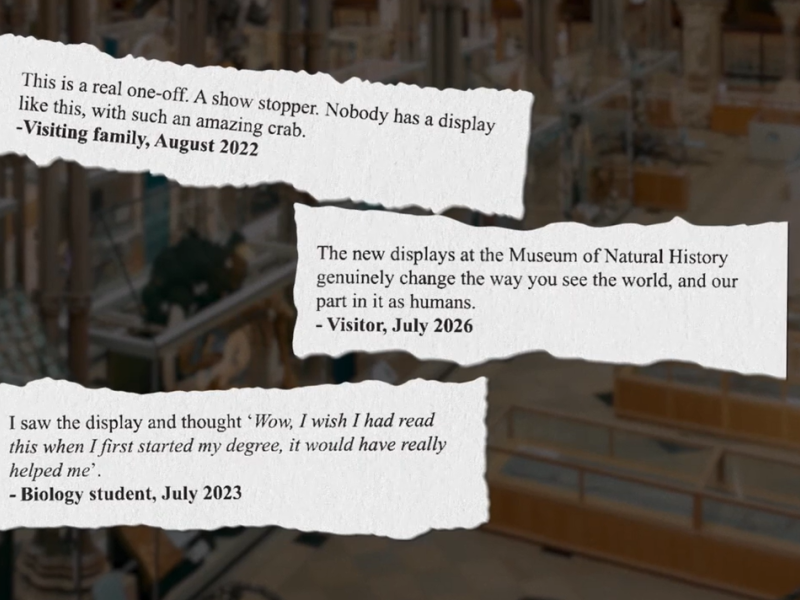
The latest phase of the project saw the opening of 16 new displays in spring 2024, spanning four key galleries: Present-day Ecosystems, How Evolution Works, Biodiversity, and How the Earth Works. These displays combine scientific research, innovative design and exceptional specimens to reveal the interconnectedness of life on Earth and the processes that shape our planet.
Among the highlights are immersive ecosystem displays featuring species from around the world, including specimens from the Amazon rainforest and East African grasslands. New evolution exhibits explore fundamental concepts such as DNA, genes and convergent evolution, providing valuable educational resources aligned with National Curriculum topics and supporting both school and university learning. Additional displays examine woodland ecology, ancient glaciers and the remarkable diversity of animal life.
The redisplay project has been developed in collaboration with scientists from across the University of Oxford, ensuring that the content reflects the latest research and scientific understanding. Designed to appeal equally to casual visitors, families, students and specialist learners, the new exhibits make complex scientific concepts accessible and engaging for all audiences.
Funding from FCC Communities Foundation has played a vital role in delivering these transformational improvements. The Foundation's support has helped create innovative galleries that encourage visitors to explore the natural world, understand the challenges facing biodiversity, and consider their own role in protecting the planet's future.
Beyond the immediate visitor experience, the project is delivering long-term benefits through the conservation of important specimens, investment in cutting-edge display technologies, and collaboration with leading researchers, designers and technicians. The programme is also expanding access to the Museum's collections through digital innovation, including the creation of high-quality 3D specimen models that can be shared with audiences both in-gallery and online.
With more than 750,000 people visiting the Museum each year, the new displays are expected to have a lasting impact by inspiring curiosity, supporting education and encouraging positive action to preserve global biodiversity. FCC Communities Foundation's investment is therefore helping to ensure that one of the nation's most important museums continues to educate, inspire and engage future generations.
Thanks to Oxford University Museum of Natural History for the celebratory video.