Bat-friendly barn completed at Wild Haweswater
28/08/2026
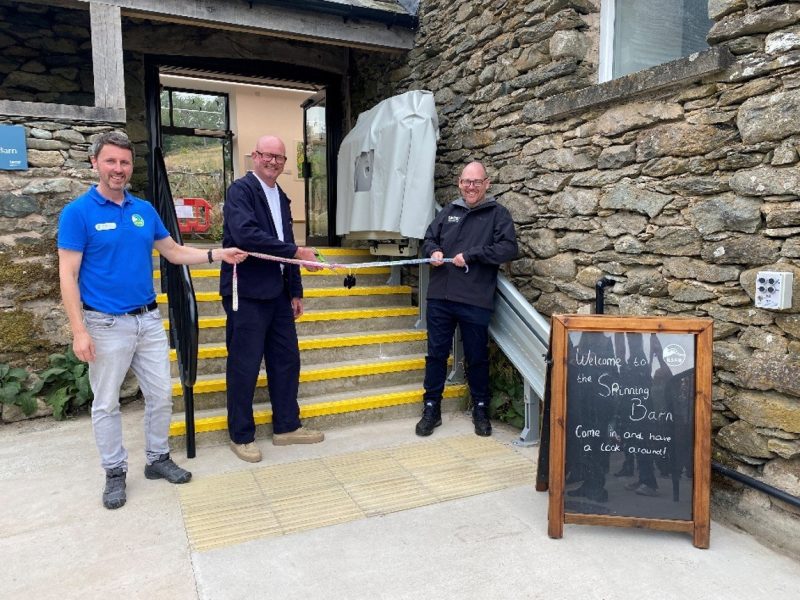
A traditional Cumbrian Spinning Barn has been restored to provide a new visitor hub at Wild Haweswater near Penrith in the Lake District, and was officially opened at a ceremony on Thursday 27 August with the red ribbon cut by Simon Settle from FCC Communities Foundation
A traditional Cumbrian Spinning Barn has been fully restored at Wild Haweswater near Penrith in the Lake District. Thanks to a £135,000 grant to the RSPB from FCC Communities Foundation, some of the barn’s original appearance has been restored externally and it’s had a full refurbishment inside, creating a new visitor engagement hub for groups visiting the site and much-needed break area for the RSPB’s volunteers. And it’s not just people who will benefit, the renovations have helped to improve conditions and conserve a colony of Brown Long-eared bats living in the ‘Bat Loft’ roof space.
This freshly re-vamped indoor space will be used by the RSPB who manage Wild Haweswater. The hub will host professional groups and public events, where people can learn more about the landscape recovery work being undertaken, led by RSPB conservationists in partnership with their landlord, United Utilities who own the site and the building.
Annabel Rushton, RSPB People and Partnerships Manager at Wild Haweswater said: “This converted Spinning Barn will make a big difference to us. We already get lots of professional groups from around Cumbria and further afield coming to find out more about our work here. However, before this we didn’t have any indoor space to host them in, which isn’t ideal in the Lake District weather. We can now provide a dry, comfortable place for these group visits as well our public events and experiences programme and the local community.”
The new visitor engagement space incorporates both visual imagery and audio information, explaining the landscape restoration work taking place at Wild Haweswater, in a variety of mediums, improving accessibility and inclusivity. This has further been enhanced by the addition of a chair lift and accessible toilet. A kitchen area is also included, making it ideal for the local community to hire for talks and events.
The newly refurbished ‘Bat Loft’ has been enhanced with special ridge-tiles in the roof that provide multiple entrances for the bats. Internal steel beams have been enhanced with undulating wood, to create more nooks and crannies for the bats to roost during the day. The roof of the barn was restored in two separate halves at different times of year, which always ensured that the bats had somewhere to roost whilst the work was being undertaken. In addition to all of this, extra bat boxes have been installed in the roof space too to support the colony as it grows.
Annabel added: “The building was also already home to a colony of Brown Long-eared bats, so we have worked with local ecologists from Simply Ecology and Cumbrian building firm Avara to ensure not only no negative impact of the work on the bats, but we have gone further to incorporate bat-friendly features into the barn to make it an even better space for them than it was before the renovations.”
Simon Settle, General Manager at FCC Communities Foundation said: "We are delighted to have supported the restoration of the Spinning Barn at Wild Haweswater with a £135,000 grant through the Landfill Communities Fund. This project is a fantastic example of how funding can help preserve an important local heritage asset while creating valuable opportunities for people to connect with nature and learn about the vital conservation work taking place across this remarkable landscape. What makes this project particularly special is that the refurbishment has also enhanced the building for the resident brown long-eared bat colony, ensuring benefits for both the local community and wildlife for many years to come."
As a former Cumbrian Spinning Barn, historically workers on the farm would have spun sheep’s wool there. The RSPB team at Wild Haweswater were keen to see the return of timber features, rather than the concrete blocks that had replaced them in modern times. This building is an important part of the site’s heritage. Information provided for visitors within the barn depicts the landscape restoration work being carried out now, which involves the use of native breed cattle and Cumbrian Fell Ponies.
The Spinning Barn was officially opened with a ribbon-cutting ceremony on Thursday 27 August, attended by representatives from FCC Communities Foundation, the RSPB, United Utilities and members of the local community.
Andrew Ward, Corporate Affairs Director for United Utilities, said: “It was a pleasure to take part in the opening of the restored spinning barn. It’s an important part of Haweswater’s heritage and has created valuable space for visitors to learn more about the important landscape recovery work that’s taking place here.”
To find out more about the work at Wild Haweswater, visit wildhaweswater.co.uk.
Pictured below is the official ribbon cutting, photos curtesy of RSPB.